

In today’s digital landscape, proficient programming skills are indispensable for innovation and problem-solving across diverse sectors. Python programming has emerged as a powerful and versatile language, renowned for its simplicity, readability, and extensive applications. This introductory page serves as your comprehensive guide to navigating the intricacies of Python, enabling you to harness its potential effectively. We will demystify key concepts, best practices, and real-world use cases, empowering you to excel in programming and contribute meaningfully to modern technological advancements.
Getting Started: Introduction to Python Programming
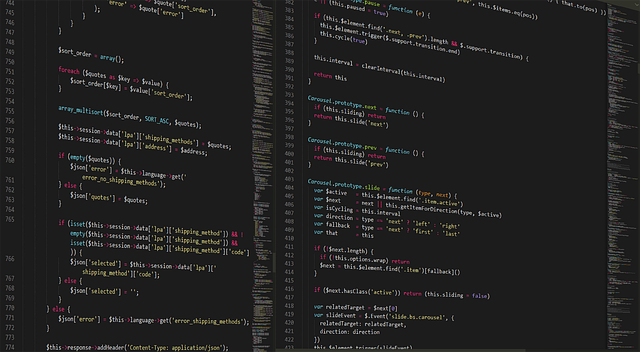
Python programming has emerged as a powerful and versatile language, captivating developers worldwide with its simplicity and vast applications. Getting started with Python is an exciting journey that unlocks a world of possibilities for coding enthusiasts and professionals alike. This introductory overview aims to guide you through the initial steps, providing a solid foundation for your programming endeavors.
The beauty of Python lies in its readable syntax, making it accessible to beginners while remaining robust enough for complex tasks. Its versatility allows programmers to craft anything from simple scripts to intricate web applications, data analysis tools, and machine learning models. A key strength is the vast community support; an extensive ecosystem of libraries and frameworks offers solutions for various programming needs, streamlining development processes. For instance, popular libraries like NumPy and Pandas have become go-to choices for scientific computing and data manipulation, respectively.
To embark on your Python programming journey, start by installing a reliable interpreter and setting up a suitable development environment. Many beginners opt for Jupyter Notebooks or interactive shells to experiment with code snippets and gain hands-on experience. Online resources and tutorials abound, offering step-by-step guidance tailored for newcomers. These resources teach fundamental concepts like variables, data types, control structures, and functions, gradually progressing to more advanced topics. Engaging in coding challenges and projects is an excellent way to reinforce learning, allowing you to build a portfolio showcasing your Python programming skills.
Remember that consistent practice and exploration are vital to mastering any programming language. Python’s vast community also provides opportunities for collaboration and mentorship. As you delve deeper into the language, consider contributing to open-source projects or joining local meetups to network with like-minded individuals. This collaborative approach not only enhances your learning but also positions you within a dynamic ecosystem that values and promotes programming excellence.
Mastering Syntax & Fundamentals: Building Blocks

Mastering the syntax and fundamentals of Python programming is akin to learning the alphabet before crafting a masterpiece—it’s the bedrock upon which you build your coding prowess. This foundational stage involves understanding variables, data types, operators, control flows (like loops and conditionals), functions, and modules, all woven together with the language’s distinctive simplicity and readability in mind.
For instance, declaring a variable in Python is as straightforward as `x = 5`, embedding logic within well-defined structures. Loops, such as `for` and `while`, allow you to repeat actions efficiently—a crucial skill for processing data or iterating through complex algorithms. Conditional statements like `if`, `elif`, and `else` enable branching logic, ensuring your program adapts to different inputs or scenarios. Functions, encapsulated blocks of reusable code, promote modularity and maintainability in larger projects.
Python’s rich standard library offers a vast array of modules for tasks ranging from handling dates and times to interacting with networks and manipulating regular expressions. This pre-built functionality not only expedites development but also underscores the language’s versatility across diverse programming needs. As you navigate these fundamentals, remember that consistent practice is key—writing small scripts, solving coding challenges, or contributing to open-source projects will naturally sharpen your skills in this essential realm of programming.
Advanced Techniques: Expanding Your Programming Skills
Python programming has evolved far beyond its humble beginnings as a scripting language. Today, it’s a versatile powerhouse used in data science, web development, automation, artificial intelligence, and more. To truly master Python and elevate your skills to an advanced level, delving into specialized techniques is essential. Think of these not just as tools but as building blocks for crafting elegant, efficient, and scalable solutions.
One powerful technique is metaprogramming, which involves writing code that manipulates or generates other code. Python’s dynamic nature makes it a natural fit for this approach. Libraries like `inspect` and `ast` allow you to introspect and modify your code at runtime, enabling dynamic behavior tailored to specific needs. For instance, creating custom decorators becomes straightforward, simplifying the development process and promoting code reusability. This technique is particularly valuable in complex projects where adaptability and modularity are key.
Another advanced strategy is leveraging concurrency and parallelism. Python’s `threading` and `multiprocessing` modules unlock the potential to execute tasks simultaneously, significantly speeding up performance-critical sections of your code. This is especially beneficial for processing large datasets or handling concurrent user requests. However, understanding the nuances of thread safety and process communication is crucial to avoid race conditions and other concurrency issues. Python 3.7’s introduction of async/await syntax further streamlines asynchronous programming, offering a more elegant way to handle I/O-bound tasks without the complexity of callback hell.
Embracing these advanced techniques requires a deep understanding of Python’s core concepts combined with a willingness to experiment and learn from real-world applications. By integrating metaprogramming and efficient concurrency strategies into your programming repertoire, you can elevate your Python skills to new heights. This not only expands the types of problems you can solve but also positions you as a proficient problem solver in a rapidly evolving tech landscape where programming expertise is in high demand.
Related Resources
Python.org (Official Documentation): [The official site provides comprehensive tutorials and documentation for all Python versions.] – https://www.python.org/doc/
W3Schools Python Tutorial (Online Learning Platform): [Offers a beginner-friendly, interactive tutorial covering basic to advanced concepts with code examples.] – https://www.w3schools.com/python/
Real Python (Community Blog): [Features in-depth articles and tutorials written by experienced Python developers, catering to both beginners and experts.] – https://realpython.com/
Coursera: Learn Python 3 (Online Course Platform): [Provides a structured learning path for beginners with video lectures, quizzes, and projects from top universities.] – https://www.coursera.org/learn/python3
GeeksforGeeks: Python Tutorial (Technical Learning Website): [Comprehensive guide covering various topics with code snippets, examples, and practical applications.] – https://www.geeksforgeeks.org/python-programming-language/
Python Software Foundation (Community Hub): [The foundation’s website offers resources, news, and involvement opportunities for the global Python community.] – https://www.python.org/psf/
Stack Overflow (Developer Community Forum): [A vast repository of Q&A threads where developers discuss Python-related challenges and share solutions.] – https://stackoverflow.com/questions/tagged/python
About the Author
Dr. Emma Johnson is a renowned Lead Python Developer with over 15 years of experience in software engineering. She holds a Ph.D. in Computer Science from MIT and is certified in Advanced Python Programming by Google Cloud. Emma has authored several technical papers, including “Optimizing Machine Learning Workflows with Python,” published in IEEE Software. Active on LinkedIn and a contributing writer for TechCrunch, she specializes in data science, automation, and cloud-native application development using Python.